- Home
- Technologies
- FDM 3D Printing (Fused Deposition Modelling)
FDM 3D Printing (Fused Deposition Modelling)
FDM (fused deposition modelling) is a 3D printing technology in which molten thermoplastic filament is deposited in layers through a heated nozzle. It is the most cost-effective option for prototypes and large parts, and the only route to PEEK and ULTEM™ plastics.
From a low-cost PLA prototype to a PEEK part for extreme conditions – and large parts up to 914 mm.
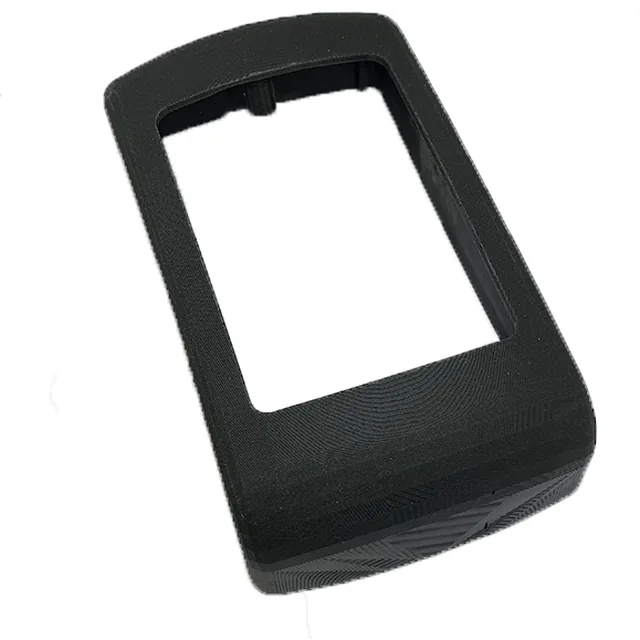
Larger parts up to 914 × 610 × 914 mm on request.
Choose FDM when you need
- Low-cost form and fit prototypes
- Large parts (up to 914 × 610 × 914 mm on request)
- Heat- and chemical-resistant parts in PEEK or ULTEM™
- Outdoor parts – ASA
- Jigs, fixtures, brackets and tooling
Strengths
- Lowest price for many parts
- Widest material range – from PLA to PEEK
- Large parts
- Many colours
Limitations
- Visible layer lines
- Lower strength in the Z direction
- Overhangs need supports
- Less accurate: ±0.5 mm or ±0.5 %
FDM materials
Properties from material datasheets. Click a material for full data and design recommendations.
Durable, wear resistant
Low cost, durable, can be transparent
The lowest cost – for visual models
The classic engineering plastic
For outdoor use – UV resistant
Strong and impact resistant
For extreme temperatures and chemicals
High strength-to-weight ratio
The highest heat resistance in FDM
Flexible, elastic, wear resistant
Property table for all FDM materials
| Property | PA nylon (FDM) | PETG (FDM) | PLA (FDM) | ABS (FDM) | ASA (FDM) | PC polycarbonate (FDM) | PEEK (FDM) | ULTEM™ 9085 (FDM) | ULTEM™ 1010 (FDM) | TPU (FDM) |
|---|---|---|---|---|---|---|---|---|---|---|
| Technology | Fused Deposition Modeling (FDM / FFF) | Fused Deposition Modeling (FDM / FFF) | Fused Deposition Modeling (FDM / FFF) | Fused Deposition Modeling (FDM / FFF) | Fused Deposition Modeling (FDM / FFF) | Fused Deposition Modeling (FDM / FFF) | Fused Deposition Modeling (FDM / FFF) | Fused Deposition Modeling (FDM / FFF) | Fused Deposition Modeling (FDM / FFF) | Fused Deposition Modeling (FDM / FFF) |
| Tensile strength | 50 MPa | 57 MPa | 45 MPa | 31 MPa | 33 MPa | 62 MPa | 56 MPa | 69 MPa | 79 MPa | 8 MPa |
| Elongation at break | 20 % | 8 % | 15 % | 6–12 % | 20 % | 8 % | 3 % | 5 % | 4 % | 350 % |
| Tensile modulus | 1500 MPa | 2900 MPa | 1500 MPa | 2400 MPa | 2150 MPa | 2400 MPa | 2500 MPa | 2500 MPa | 3000 MPa | 70 MPa |
| Flexural strength | 42 MPa | 27 MPa | 26 MPa | 27 MPa | 30 MPa | 27 MPa | 30 MPa | 104 MPa | 128 MPa | — |
| Service temperature (max) | 95 °C | 75 °C | 50 °C | 100 °C | 100 °C | to be confirmed | to be confirmed | 150 °C | 215 °C | to be confirmed |
| Hardness (Shore) | — | — | — | — | — | — | — | — | — | — |
| Colours | various | transparent, various | various, transparent | various | various | various, semi-transparent | light brown | light brown | light brown | black, various |
| Max. dimensions | 300 × 200 × 200 mm | 300 × 200 × 200 mm | 300 × 200 × 200 mm | 300 × 200 × 200 mm | 300 × 200 × 200 mm | 300 × 200 × 200 mm | 300 × 200 × 200 mm | 300 × 200 × 200 mm | 300 × 200 × 200 mm | 300 × 200 × 200 mm |
| Accuracy | ±0.5 mm or ±0.5 % | ±0.5 mm or ±0.5 % | ±0.5 mm or ±0.5 % | ±0.5 mm or ±0.5 % | ±0.5 mm or ±0.5 % | ±0.5 mm or ±0.5 % | ±0.5 mm or ±0.5 % | ±0.5 mm or ±0.5 % | ±0.5 mm or ±0.5 % | ±0.5 mm or ±0.5 % |
| Min. wall | 0.75 mm (down to 0.5 mm) | 0.75 mm (down to 0.5 mm) | 0.75 mm (down to 0.5 mm) | 0.75 mm (down to 0.5 mm) | 0.75 mm (down to 0.5 mm) | 0.75 mm (down to 0.5 mm) | 0.75 mm (down to 0.5 mm) | 0.75 mm (down to 0.5 mm) | 0.75 mm (down to 0.5 mm) | 0.75 mm (down to 0.5 mm) |
| Production time | up to 7 business days · express up to 4 | up to 7 business days · express up to 4 | up to 7 business days · express up to 4 | up to 7 business days · express up to 4 | up to 7 business days · express up to 4 | up to 7 business days · express up to 4 | up to 7 business days · express up to 4 | up to 7 business days · express up to 4 | up to 7 business days · express up to 4 | up to 7 business days · express up to 4 |
| Relative price | €€€€ | €€€€ | €€€€ | €€€€ | €€€€ | €€€€ | €€€€ | €€€€ | €€€€ | €€€€ |
| Datasheet |
Made with FDM
How FDM works
FDM (also called FFF – fused filament fabrication) is one of the oldest 3D printing technologies, developed in the late 1980s. A thermoplastic filament is fed into a heated nozzle (hotend), melted and deposited layer by layer along the contour of the part. The platform moves down after each layer.
When to choose FDM
- Cost-effective prototypes – PLA, PETG, ABS for form and fit checks.
- Large parts – up to 300 × 200 × 200 mm as standard, larger parts up to 914 × 610 × 914 mm on request.
- High-performance plastics – PEEK, ULTEM™ 9085 and 1010: extreme temperatures, chemicals, materials used in the aerospace industry.
- Outdoor use – ASA, resistant to UV.
Surface and finishing
The surface is smooth, but layer lines are visible. Overhangs need supports, which are removed. Hand or chemical smoothing, painting, clear coating and threaded inserts are available.
Cost factors
- Complexity – parts larger than ~150 × 150 × 150 mm require many supports.
- Build time – long, thin structures are printed upright (45–60°), which multiplies machine hours.
- Manual post-processing – high surface quality requires support removal and sanding.
Designing for FDM
- Minimum wall – 0.75 mm; in practice, choose ≥1.2 mm for functional parts.
- Overhangs up to ~45° print without supports.
- Clearances between moving parts – 1–2 mm.
- Smallest feature – no less than 0.5 mm.
- Strength across layers (Z) is lower – we choose the orientation to suit the load.
Finishing options
Standard finishing is included. Choose extras in the configurator – price and lead time update instantly.
Standard finish included
Removal of excess material and glass-bead blasting (powder technologies), support removal (SLA, FDM).
no extra time
Spray painting
Priming and spray painting in the colour of your choice.
+3 business days
Chemical smoothing
The surface is smoothed chemically – lower roughness, easier to clean, a better sealed surface.
+2 business days
Threaded inserts
Metal threaded inserts are heat-set into prepared holes. Specify the quantity per part.
+1 business days
Thread tapping
Threads are cut directly into the plastic in prepared holes. Specify the quantity and thread size in the notes.
+1 business days
Hand polishing
Sanding and polishing of support marks and layer lines by hand.
+2 business days
Sealing / lacquering
The surface is lacquered or impregnated – for tightness, moisture resistance and gloss.
+1 business days
FDM – frequently asked questions
What is FDM 3D printing?
FDM (FFF) is a technology in which thermoplastic filament is melted in a heated nozzle and deposited in layers along the contour of the part.
Which FDM materials do you offer?
PLA, PETG, ABS, ASA, PC, PA nylon, TPU, PEEK, ULTEM™ 9085 and ULTEM™ 1010.
Is FDM suitable for functional parts?
Yes, especially with ABS, ASA, PC, nylon or PEEK. Correct orientation matters – strength between layers is lower.
How large can FDM parts be?
Up to 300 × 200 × 200 mm as standard; larger parts – up to 914 × 610 × 914 mm – on request.