- Home
- Technologies
Technologies
We produce parts with four industrial 3D printing technologies: MJF and SLS for strong nylon parts and batches, SLA for fine detail and a smooth surface, and FDM for cost-effective prototypes, large parts and specialist engineering plastics.
All technologies in one configurator. Upload a model to compare price and lead time across processes.
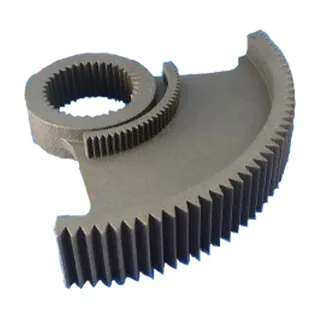
HP Multi Jet Fusion
Functional nylon parts and small batches
- Surface
- matte, slightly grainy
- Strength
- Detail
- Price
- €€€€
- Lead time
- up to 7 business days
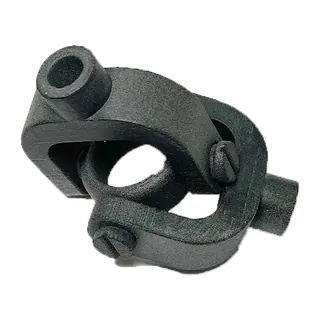
Selective Laser Sintering
Larger nylon parts and specialist materials
- Surface
- smooth, slightly porous
- Strength
- Detail
- Price
- €€€€
- Lead time
- up to 7 business days
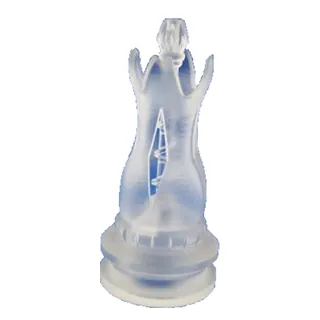
Stereolithography
Fine detail, smooth surface, transparency
- Surface
- smooth, almost no layer lines
- Strength
- Detail
- Price
- €€€€
- Lead time
- up to 5 business days
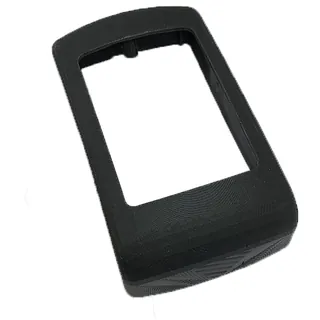
Fused Deposition Modeling
Low-cost prototypes, large parts, PEEK and ULTEM™
- Surface
- visible layer lines
- Strength
- Detail
- Price
- €€€€
- Lead time
- up to 7 business days
Technologies side by side
Key specifications in one table.
| MJF | SLS | SLA | FDM | |
|---|---|---|---|---|
| Best suited for | Functional nylon parts and small batches | Larger nylon parts and specialist materials | Fine detail, smooth surface, transparency | Low-cost prototypes, large parts, PEEK and ULTEM™ |
| Surface | matte, slightly grainy | smooth, slightly porous | smooth, almost no layer lines | visible layer lines |
| Supports | not required | not required | required (removed) | required (removed) |
| Build volume | 380 × 380 × 284 mm | 335 × 335 × 600 mm | 254 × 254 × 330 mm | 300 × 200 × 200 mm |
| Accuracy | ±0.3 mm / ±0.3 % | ±0.3 mm / ±0.3 % | ±0.2 mm / ±0.2 % | ±0.5 mm / ±0.5 % |
| Min. wall | 0.75 mm | 0.75 mm | 0.75 mm | 0.75 mm |
| Production | up to 7 business days (express 4) | up to 7 business days (express 4) | up to 5 business days (express 3) | up to 7 business days (express 4) |
| Min. price | €20 / part | €20 / part | €40 / part | €20 / part |
| Materials | 6 | 6 | 5 | 10 |
Help me choose
No need to know MJF, SLS, SLA or FDM. Select what matters – we’ll show the 2–3 best options from our catalogue.
How to choose a technology
Start with what the part has to do, not with the name of the technology:
- A functional, load-bearing plastic part or a batch – MJF or SLS with PA12/PA11 nylon.
- Fine detail, a smooth surface, transparency – SLA.
- A low-cost prototype, a large part, a specialist engineering plastic (PEEK, ULTEM™) – FDM.
- A flexible, rubber-like part – TPU (MJF, SLS or FDM) or Flex resin (SLA).
Once you upload a model, the configurator lets you compare the price and lead time of the same part across technologies.
Powder technologies: MJF and SLS
MJF and SLS build parts from a bed of polymer powder – no supports are needed, so you can produce complex internal geometry, moving assemblies in one piece and dozens of parts in a single build. These are the core technologies for functional prototypes and small batches.
Resin technology: SLA
SLA cures liquid photopolymer resin with a laser. It delivers the smoothest surface and the finest detail of all technologies. Supports are required, and their marks are sanded off.
Extrusion technology: FDM
FDM deposits molten thermoplastic filament. It is the most economical way to make large parts and the only route to top-tier plastics such as PEEK or ULTEM™.
About technologies
What is the difference between MJF and SLS?
Both technologies produce strong nylon parts without supports. MJF is often more cost-effective for batches and gives a denser, more isotropic part; SLS has a larger build volume (up to 335 × 335 × 600 mm) and more specialist materials (PA11 ESD, Alumide, PA GF).
Which technology is the cheapest?
Usually FDM with PLA, PETG or ABS – especially for large parts with simple shapes. For batches and complex small parts, MJF is often the most economical. The calculator will show you the exact price.
Which technology is the most accurate?
SLA: typical accuracy ±0.2 mm or ±0.2 %. MJF and SLS – ±0.3 mm or ±0.3 %, FDM – ±0.5 mm or ±0.5 % (whichever is greater).