- Home
- Technologies
- SLA 3D Printing (Stereolithography)
SLA 3D Printing (Stereolithography)
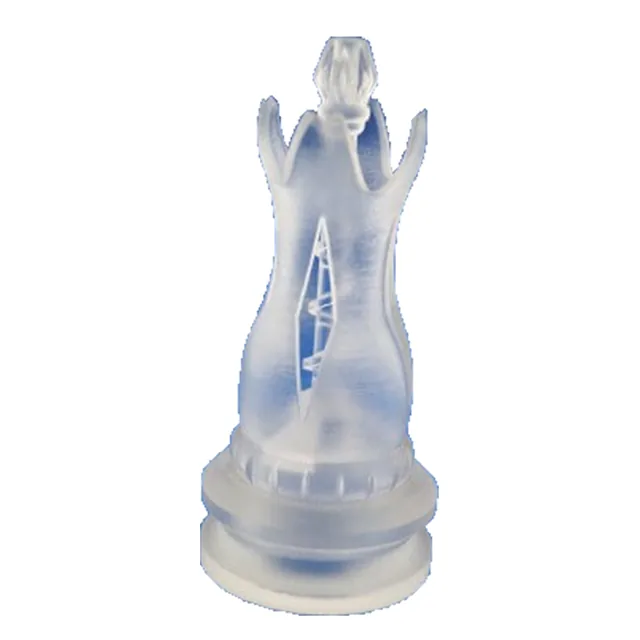
SLA (stereolithography) is a 3D printing technology in which a UV laser cures liquid photopolymer resin layer by layer. It delivers the smoothest surface and the finest detail, and suits visual models, precise prototypes and transparent parts.
When surface finish, fine detail or transparency matter – SLA resins from clear to heat resistant.
Choose SLA when you need
- Smooth-surface visual models and housings
- Fine detail, text and patterns
- Transparent parts, light guides, visible channels
- Mould and template patterns
- Precise prototypes before moulding
Strengths
- The smoothest surface of any technology
- The finest detail
- Most accurate: ±0.2 mm or ±0.2 %
- Clear and specialist resins
Limitations
- Supports needed – marks remain
- Resins are more brittle than nylon
- Sensitive to UV light over time
- Higher minimum price (€40 per part)
SLA materials
Properties from material datasheets. Click a material for full data and design recommendations.
Transparent, smooth surface
Impact resistant, slightly flexible
High temperature resistant
Strong, simulates ABS properties
Flexible, soft, fine detail
Property table for all SLA materials
| Property | Clear resin (SLA) | Durable resin (SLA) | High Temp resin (SLA) | Tough resin (SLA) | Flex resin (SLA) |
|---|---|---|---|---|---|
| Technology | Stereolithography (SLA) | Stereolithography (SLA) | Stereolithography (SLA) | Stereolithography (SLA) | Stereolithography (SLA) |
| Tensile strength | 65 MPa | 28 MPa | 58 MPa | 46 MPa | 9 MPa |
| Elongation at break | 6–12 % | 55 % | 3 % | 48 % | 120 % |
| Tensile modulus | 2800 MPa | 660 MPa | 2750 MPa | 1900 MPa | 6 MPa |
| Flexural strength | 42 MPa | 24 MPa | 94 MPa | 65 MPa | — |
| Service temperature (max) | 70 °C | 41 °C | 240 °C | 60 °C | to be confirmed |
| Hardness (Shore) | — | — | — | — | 50–80A |
| Colours | transparent (up to ~80%) | grey | semi-transparent, brownish | grey | semi-transparent |
| Max. dimensions | 145 × 145 × 145 mm | 254 × 254 × 330 mm | 254 × 254 × 330 mm | 254 × 254 × 330 mm | 254 × 254 × 330 mm |
| Accuracy | ±0.2 mm or ±0.2 % | ±0.2 mm or ±0.2 % | ±0.2 mm or ±0.2 % | ±0.2 mm or ±0.2 % | ±0.2 mm or ±0.2 % |
| Min. wall | 0.75 mm (down to 0.5 mm) | 0.75 mm (down to 0.5 mm) | 0.75 mm (down to 0.5 mm) | 0.75 mm (down to 0.5 mm) | 0.75 mm (down to 0.5 mm) |
| Production time | up to 5 business days · express up to 3 | up to 5 business days · express up to 3 | up to 5 business days · express up to 3 | up to 5 business days · express up to 3 | up to 5 business days · express up to 3 |
| Relative price | €€€€ | €€€€ | €€€€ | €€€€ | €€€€ |
| Datasheet |
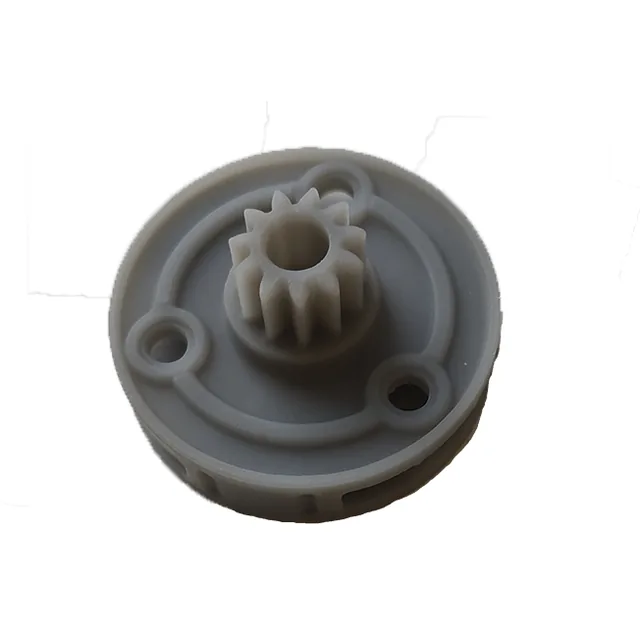
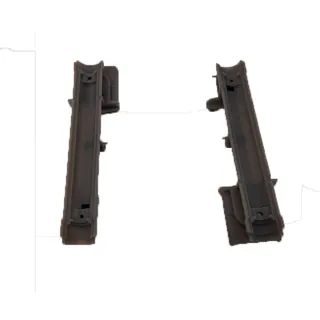
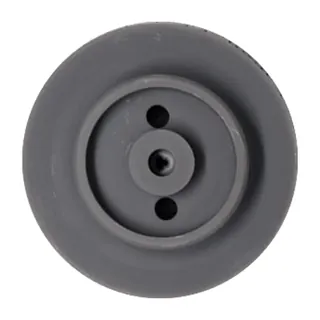
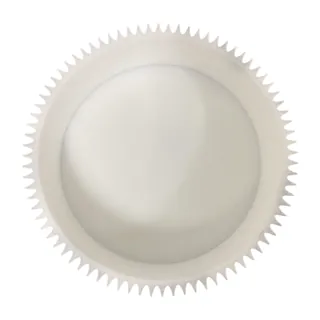
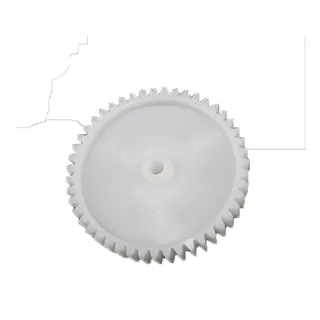
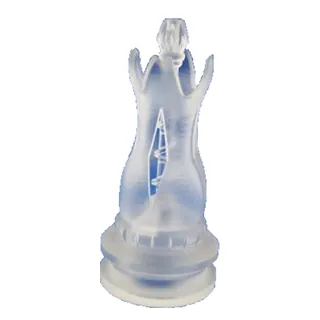
Made with SLA
How SLA works
In a vat of liquid photopolymer resin, a UV laser cures the cross-section of the part layer by layer. Stereolithography is the oldest additive manufacturing technology, in use for more than 30 years. That means maturity, not obsolescence: SLA is one of the most reliable technologies for rapid prototyping and for parts where surface quality matters.
When to choose SLA
- A smooth surface without extra finishing – visual models, housing prototypes, mould patterns.
- Fine detail and thin features – small parts, text, patterns.
- Transparency – Clear resin lets you see internal channels and is used for light guides.
- Special properties – High Temp (high temperature), Tough and Durable (impact resistant), Flex (flexible).
Supports and finishing
SLA parts need supports: these are removed and the marks are sanded. It is therefore important to know which surfaces are visible – state this in the configurator notes. Hand polishing (to high clarity for Clear resin), painting and clear coating are available.
Cost factors
- Complexity and size – parts larger than ~100 × 100 × 100 mm require many supports.
- Orientation – long, thin parts are printed at an angle (45–60°), which increases build time.
- Manual post-processing – high surface quality requires more work to clean up supports.
Designing for SLA
- Minimum wall – 0.75 mm (down to 0.5 mm in places).
- Hollow parts – drain holes to let resin escape.
- Avoid large unsupported horizontal surfaces.
Finishing options
Standard finishing is included. Choose extras in the configurator – price and lead time update instantly.
Standard finish included
Removal of excess material and glass-bead blasting (powder technologies), support removal (SLA, FDM).
no extra time
Spray painting
Priming and spray painting in the colour of your choice.
+3 business days
Hand polishing
Sanding and polishing of support marks and layer lines by hand.
+2 business days
Sealing / lacquering
The surface is lacquered or impregnated – for tightness, moisture resistance and gloss.
+1 business days
SLA – frequently asked questions
What is SLA 3D printing?
SLA (stereolithography) is a technology in which a UV laser cures liquid photopolymer resin layer by layer. The result is accurate parts with a smooth surface.
Can SLA parts be transparent?
Yes – Clear resin is about 80 % transparent, with a slight haze. Polishing and clear coating increase clarity further.
Is SLA suitable for functional parts?
In some cases – Tough and Durable resins are more impact resistant, High Temp withstands heat. For long-term loads and outdoor use, nylon (MJF/SLS) is usually the better choice.
How accurate is SLA?
Typical accuracy is ±0.2 mm or ±0.2 % (whichever is greater).