- Home
- Industries
- Automotive
Automotive
In the automotive industry, 3D printing is used for functional prototypes, brackets, air ducts, assembly jigs and discontinued spare parts. Most often in MJF or SLS nylon; PA GF or ULTEM™ for heat, ASA for exterior parts.
What we solve
Prototypes before tooling
Before the injection mold is ordered, the part has to be tested in assembly and in service.
Discontinued parts
Parts for older vehicles are no longer available – you need a few, not a thousand.
Heat and chemicals
Under-the-hood parts are exposed to high temperatures, oils and fuel.
Recommended technologies
Typical parts
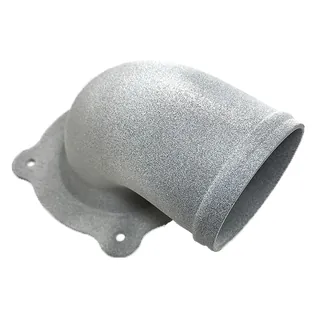
Air ducts and nozzles
Complex internal shapes with no assembly.
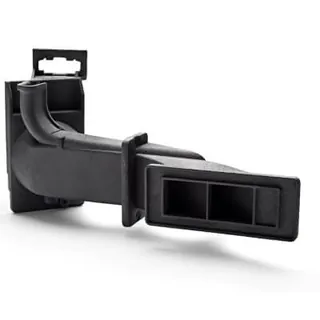
Brackets and mounts
Holders for sensors, cables and modules.
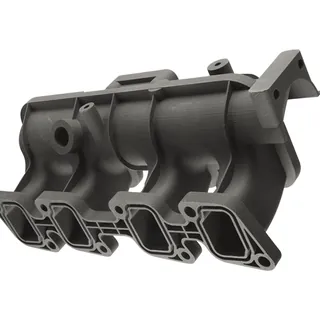
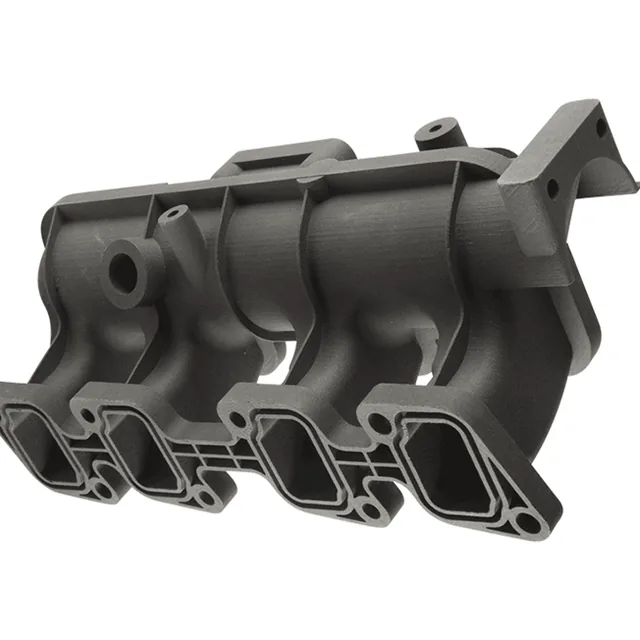
Intake manifold prototypes
Form and flow verification.
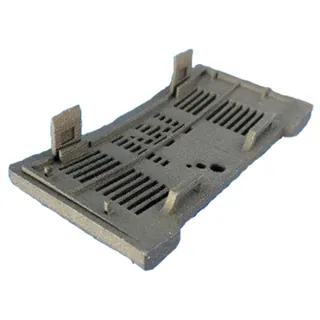
Assembly jigs
Positioning and inspection tools for the line.
Where 3D printing adds the most value
In automotive, 3D printing shortens the path from idea to tested part: a functional PA12 prototype can be in your hands within days, not the weeks an injection mold takes. For low volumes and spare parts, a mold is often not needed at all.
Materials by operating conditions
- Interior – PA12, PA11 (clips), TPU (gaskets, protective covers).
- Engine bay – PA GF, ULTEM™, PEEK (depending on temperature and chemicals).
- Exterior – ASA or black-dyed PA12.
Quality and documentation
Every order is inspected before shipping; an inspection report is available on request. Specify critical dimensions in the configurator’s advanced settings.
Before you upload
- For under-the-hood parts, specify the operating temperature and chemicals – we will select the material.
- For clips and latches choose PA11 – higher elongation at break.
- Dye exterior parts black or choose ASA.
Frequently asked questions
Are 3D printed parts suitable for use in vehicles?
Yes, if the material is selected for the conditions: temperature, chemicals, UV and load. For safety-critical parts, 3D printing is not recommended without separate validation.